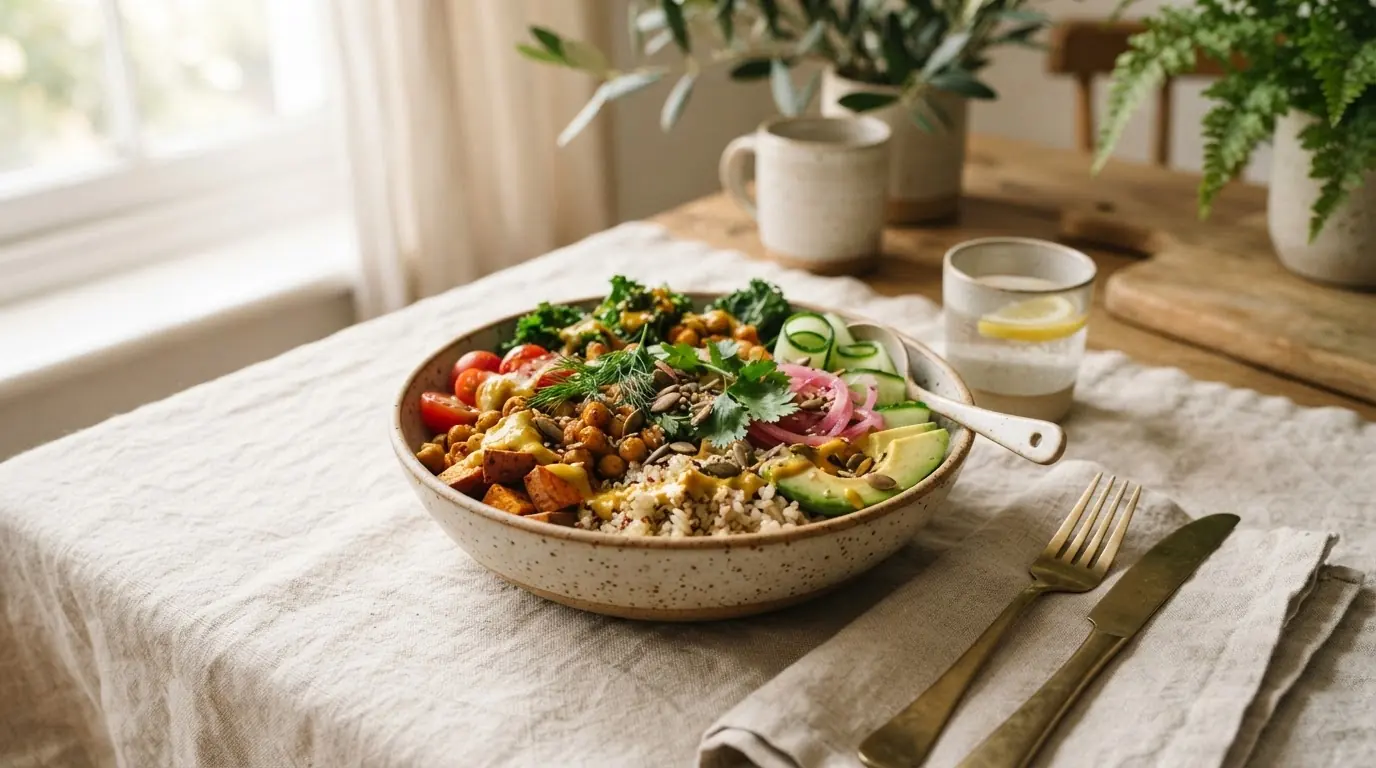
Healthy eating starts not with bans but with rhythm: regular meals, a source of protein and vegetables at every meal, enough water and room for the food you enjoy. Change comes from habits you can keep, not from a perfect plan that lasts two weeks.
Why do strict diets usually fail?
Diets built on restriction tend to fail because they fight the body's signals. Nourishment works with them: it asks what gives you energy, what settles your digestion and what keeps you going through the afternoon.
Consistent routines, quality rest and nourishing food form the foundation of well-being.
What is healthy eating?
Healthy eating is not a specific menu but a few principles you follow most of the time:
- Regularity. You eat at similar times and do not skip meals.
- Variety. Vegetables, fruit, whole grains, sources of protein and good fats.
- Less processed food. More often you choose what is closer to the natural product.
- Water. It is your main drink of the day.
- Moderation instead of bans. There is room for the food you love.
What does a balanced plate look like?
| Part of the plate | What it is | Examples |
|---|---|---|
| Half | Vegetables | Salad, stewed or roasted vegetables |
| A quarter | Protein | Eggs, fish, meat, pulses, cottage cheese |
| A quarter | Carbohydrates | Buckwheat, rice, potatoes, wholegrain bread |
| On top | Fats | Oil, nuts, seeds, avocado |
It is a guide, not a rule: portions depend on how active you are and on your goal.
Why does rhythm matter more than rules?
Instead of rigid rules I guide clients towards rhythm: consistent meal times, enough protein to feel full and room for the food that brings pleasure. Habits, not perfection, carry the change.
Where to start: 5 first steps
- One calm meal a day. Eat slowly, without your phone. An hour later, notice how you feel.
- A source of protein at every meal.
- Vegetables at least twice a day.
- Water instead of sweet drinks.
- A plan for tomorrow. In the evening, think about what you will eat tomorrow – there will be fewer random snacks.
Change one thing at a time: once it has become a habit, add the next.
A short question to think about – an apple or apple juice.
What is not worth doing?
- Cutting out whole food groups without advice from a doctor or dietitian.
- Counting every bite, if it makes you tense.
- Starving yourself after a “bad” day. Simply return to your usual rhythm at the next meal.
- Expecting quick results. How you feel changes over weeks, not days.
When is it worth asking for help?
If you have a health condition, allergies or take medication, discuss changes to your diet with your doctor first.
A personal plan is useful when you do not know where to start, have a specific goal or want your eating to fit your schedule and training.
Frequently asked questions about healthy eating
No. Healthy eating leaves room for the food you love. What matters is what you eat most days, not a single dessert.
Three main meals and, if needed, one or two snacks suit most people. Regularity matters most.
Not necessarily. A balanced plate and regular meals are enough for many people. Counting is useful when you have a specific goal.
With one calm meal a day at the same time. Once it has become a habit, work on the next one.
A diet is usually temporary and built on restriction. A nutrition plan is adapted to your schedule and aims for habits you can keep.
Want a plan adapted to your day? A personal nutrition plan is a 60-minute online consultation and a plan within 3 working days, for €65. If you want to work on movement and nutrition together, that is what health coaching is for. Not sure what you need? Book a free 20-minute call.