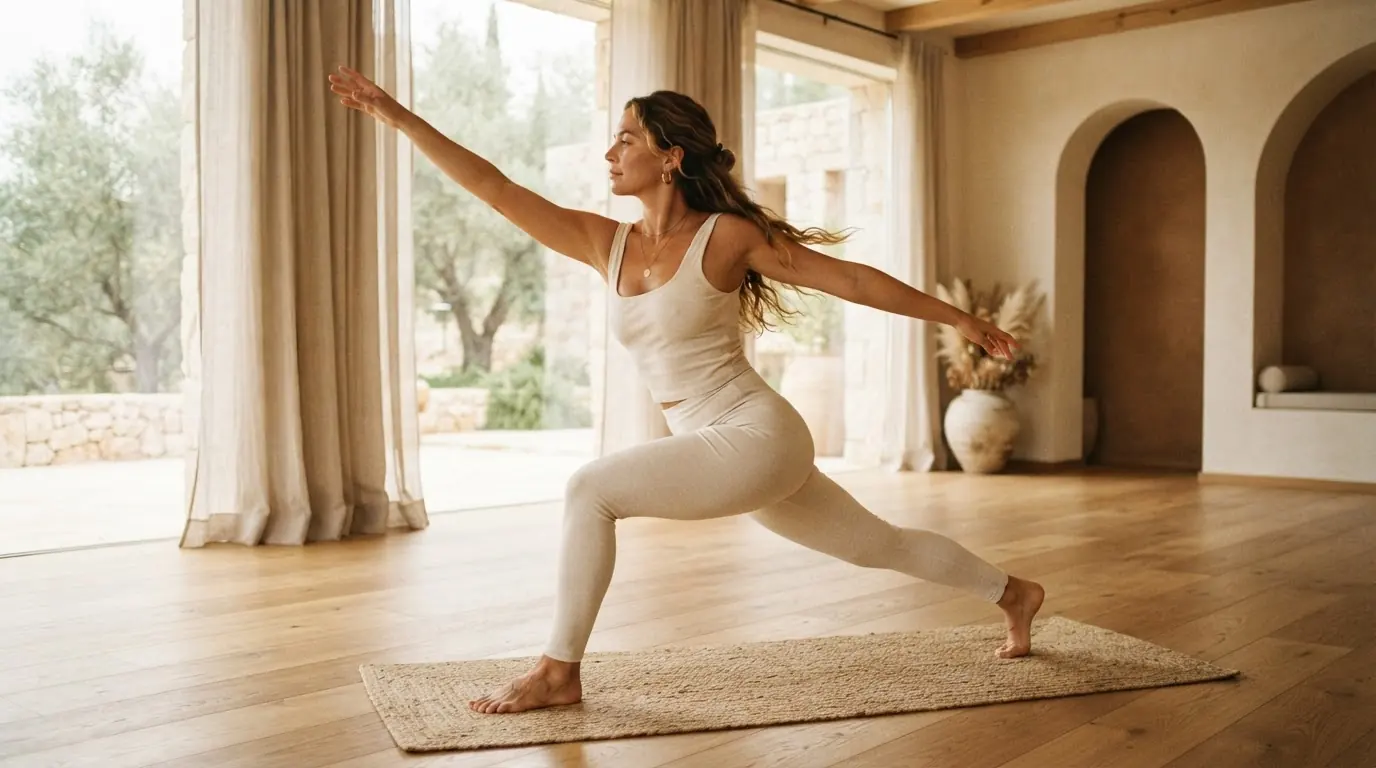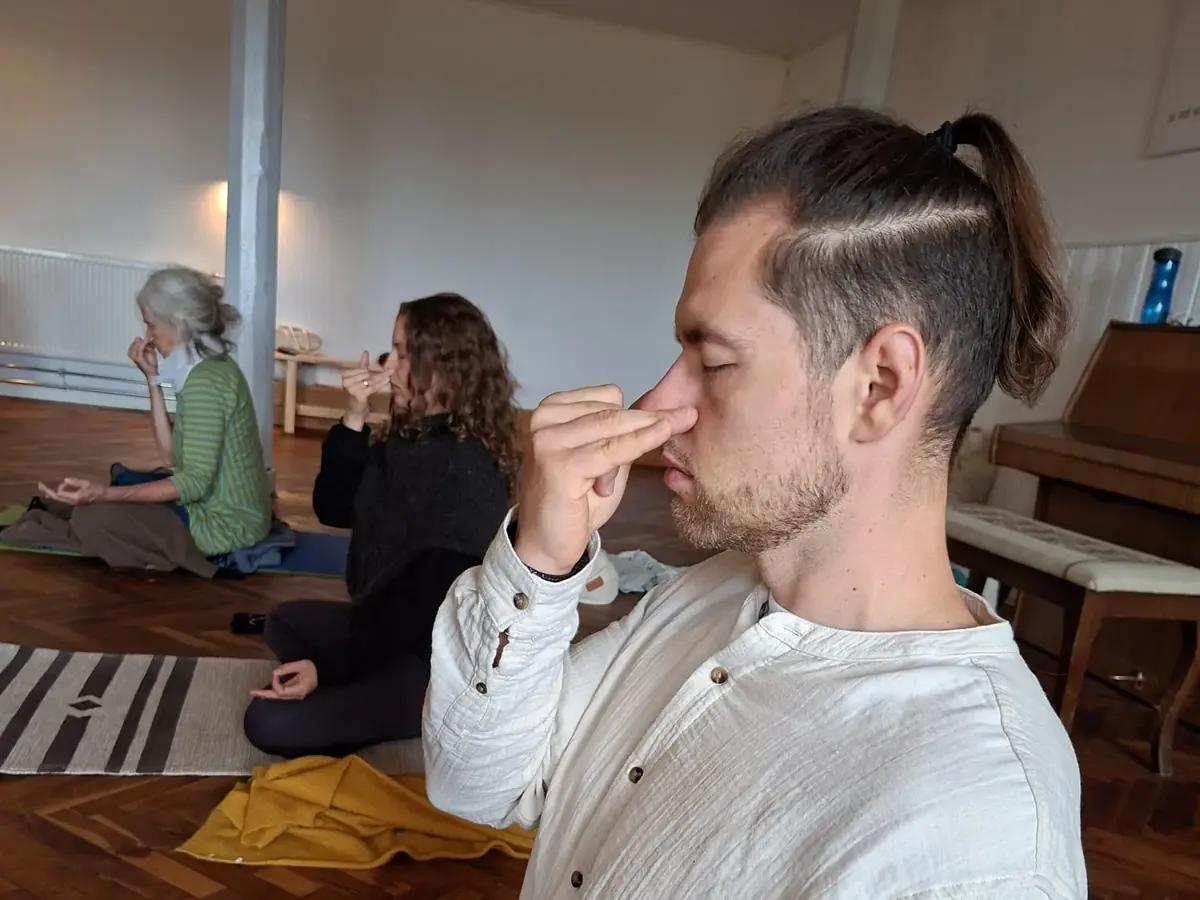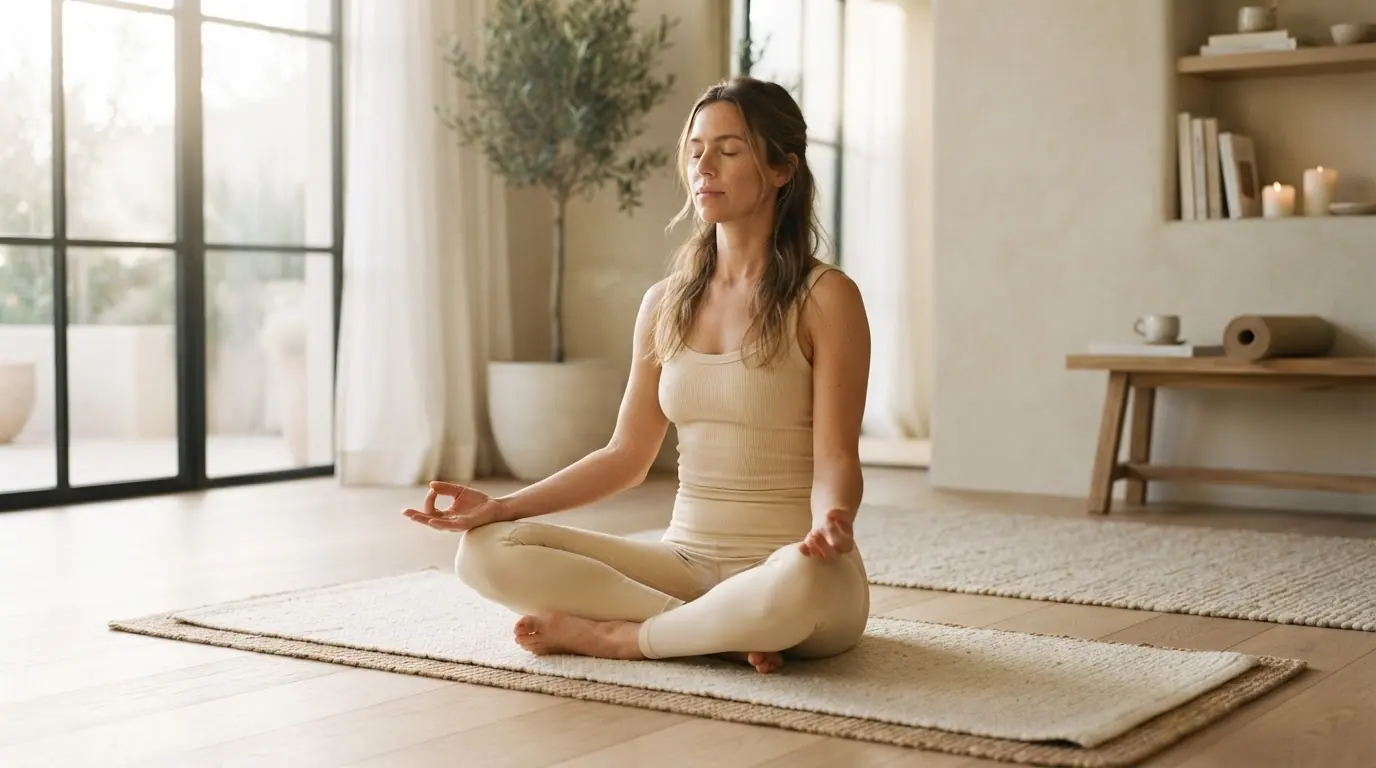
In yoga you breathe through the nose, calmly and evenly, and you match movement to breath: you inhale as you open and rise, and exhale as you fold and lower. The foundation is diaphragmatic (belly) breathing. If you can no longer breathe calmly in a pose, it is too deep for you for now.
Why is breathing so important in yoga?
Practising yoga through a screen can feel distant at first. Yet the moment you tune into your breath, the distance dissolves – the breath is always here, always now.
The breath links movement and attention, shows whether the effort is right for you and helps you calm down. That is why in class it matters more than how deep you fold.
Your body is always giving feedback. Learning to listen changes everything.
What is diaphragmatic breathing?
Diaphragmatic, or belly, breathing means the belly gently rises as you inhale and falls as you exhale. The chest and shoulders stay quiet. This is how a calm, rested body breathes.
How to try it:
- Lie on your back or sit comfortably.
- Place one palm on your belly and the other on your chest.
- Inhale slowly through the nose so that the palm on your belly rises.
- Exhale slowly through the nose – the belly falls.
- Repeat 5–10 times without hurrying.
You will find more techniques in the article “Breathing exercises: 5 techniques to calm down”.
When do you inhale and when do you exhale?
| Movement | Breath |
|---|---|
| Arms rise, the chest opens, you bend back | Inhale |
| You fold forward, twist or lower down | Exhale |
| You hold a pose | Calm, even breathing |
| You move from one pose to the next | One movement – one inhale or one exhale |
You can see how this works in practice in the sun salutation: every movement gets an inhale or an exhale.
What is pranayama?
Pranayama is the name for yoga breathing exercises done separately from the poses: seated, calmly, in a set rhythm. For beginners, diaphragmatic breathing and a longer exhale are enough. More complex techniques with breath holds are better learned with a teacher.
The most common breathing mistakes in yoga
- Holding the breath. Usually in demanding poses. If you notice it, ease out of the pose a little.
- Breathing through the mouth. In yoga you breathe through the nose unless the teacher says otherwise.
- Lifted shoulders. As you inhale the shoulders stay low; the belly and ribs move.
- Rushing. Movement follows the breath, not the other way round.
How is breathing corrected in a live online class?
In a live class we move together, in real time. On camera I can see when your shoulders lift, your face tenses or your breathing stops, and I offer an easier version or remind you to exhale straight away. A video cannot see that.
More on the differences in the article “Online yoga: live class or video?”.
How do you prepare to practise at home?
Find a quiet corner, roll out your mat and simply breathe for the first few minutes. Let the breath set the pace. Sixty minutes of guided, attentive movement is enough to release tension in the back and bring back a sense of calm.
Frequently asked questions about breathing in yoga
Mostly yes: nasal breathing is slower and calmer. If your nose is blocked, breathe in whatever way is comfortable.
Nothing is wrong. Pause, take a couple of calm breaths in and out, then return to the movement at your own pace.
Yes, they are two names for the same way of breathing.
Yes. Start with diaphragmatic breathing and a longer exhale. If you feel dizzy, go back to normal breathing.
Three to five minutes is enough. Regularity matters more than length.
Want to learn to breathe together with movement? Online yoga classes run three times a week, live on Google Meet, in groups of up to 8 people. A class costs €12. If you are not sure where to start, book a free 20-minute call.