Breathing exercises mean changing the rhythm of your breath on purpose. Slow breathing through the nose, with the exhale longer than the inhale, calms you best. Start with belly breathing: 5 minutes a day, sitting or lying down. Below are 5 techniques with exact counts.
What are breathing exercises?
We usually breathe without thinking – about 12–20 times a minute at rest. In breathing exercises we control that rhythm ourselves: we breathe more slowly, more deeply or to a set count.
In yoga, breathing exercises are called pranayama. It is one of the three parts of hatha yoga, alongside poses and relaxation.
Why does slow breathing calm you?
When we are anxious, breathing becomes fast and shallow. The link works the other way too: when you slow your breath, the body gets a signal that there is no danger. The heart rate slows and the muscles relax.
A long exhale has the strongest effect. That is why in many techniques you breathe out for longer than you breathe in.
5 breathing exercises
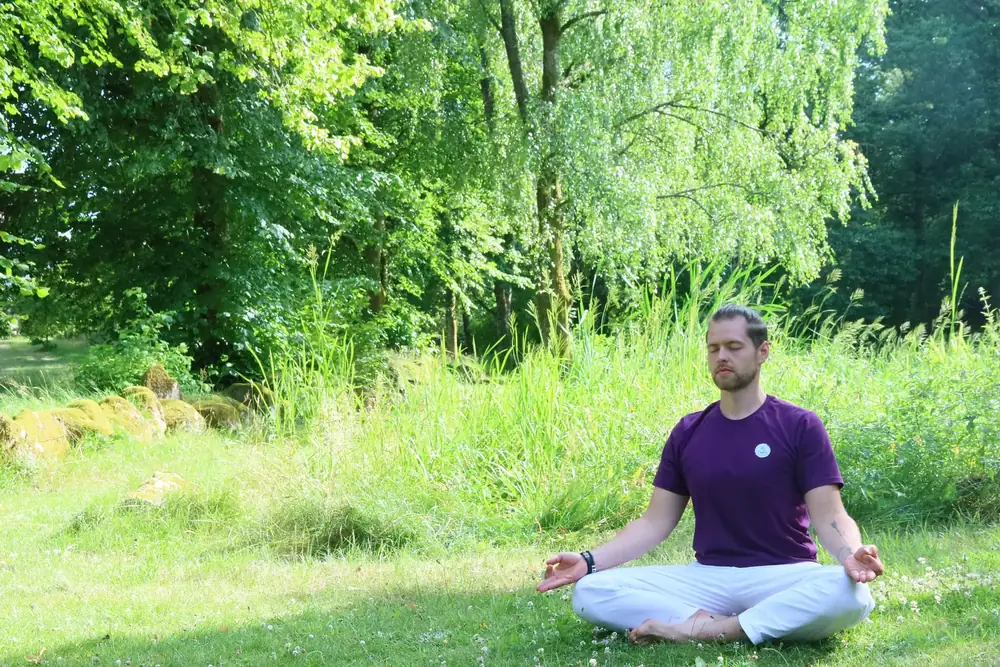
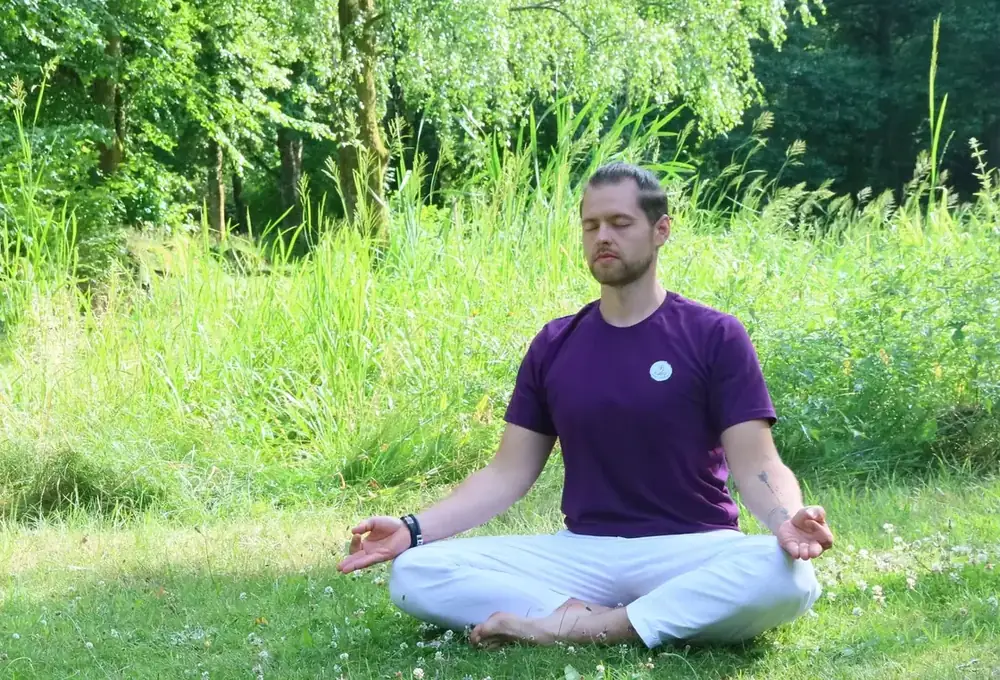
Do every exercise sitting with a straight back or lying down. Breathe through the nose and without effort unless stated otherwise.
1. Belly (diaphragmatic) breathing
Good for starting out and before sleep.
- Put one palm on your belly and the other on your chest.
- Breathe in through the nose for a count of 4. The belly rises, the chest barely moves.
- Breathe out through the nose for a count of 6. The belly falls.
- Repeat for 5 minutes.
2. Longer exhale
Good when you notice tension during the day – at your desk or before an important conversation.
- Breathe in through the nose for a count of 3.
- Breathe out for a count of 6.
- Repeat 10 times.
When it gets easy, lengthen it: inhale for 4, exhale for 8.
3. Box breathing
Four equal parts help you focus.
- Breathe in for a count of 4.
- Hold your breath for a count of 4.
- Breathe out for a count of 4.
- Wait without breathing in for a count of 4.
- Repeat 4–6 rounds.
4. 4-7-8 breathing
Good in the evening when it is hard to fall asleep.
- Breathe in through the nose for a count of 4.
- Hold your breath for a count of 7.
- Breathe out slowly through the mouth for a count of 8.
- Repeat 4 rounds.
If holding for 7 is too hard, shorten every part but keep the same ratio.
5. Alternate nostril breathing
In yoga this technique is called “nadi shodhana”. It slows the breath and helps you concentrate.
- Close your right nostril with your right thumb and breathe in through the left.
- Close the left nostril with your ring finger, release the right and breathe out through it.
- Breathe in through the right nostril.
- Close it, release the left and breathe out through the left. That is one round.
- Repeat 5–10 rounds at a calm pace.
Which breathing exercise should you choose?
| Situation | Exercise | Duration |
|---|---|---|
| I am starting and want something simple | Belly breathing | 5 min |
| Tension during the working day | Longer exhale | 2–3 min |
| I need to focus | Box breathing | 2–3 min |
| Hard to fall asleep | 4-7-8 breathing | 4 rounds |
| I want to wind down after the day | Alternate nostril breathing | 3–5 min |
How do you turn breathing exercises into a habit?
- Tie them to a habit you already have – after your morning coffee, before sleep or when you sit down at your desk.
- Start with 5 minutes. A short daily exercise works better than a long one once a week.
- Pick one technique and do it for two weeks, and only then try another.
- Do not force it. The breath should be quiet and easy, with no feeling of running out of air.
When should you not do breathing exercises?
Breathing exercises are safe for most people, but follow a few rules:
- if you feel dizzy or your fingers start to tingle, stop and breathe normally;
- during pregnancy, or with heart, blood pressure or respiratory conditions, do not hold your breath and talk to your doctor first;
- do not do the exercises while driving or in water.
Breathing exercises are not a treatment. If anxiety or insomnia lasts a long time, see a doctor.
Breathing in a yoga class
I begin and end my classes with the breath: a few minutes of belly breathing at the start and calm breathing before relaxation. In the poses the breath helps keep the pace – the movement follows the inhale and the exhale.
The most common beginner mistake is holding the breath in a harder pose. In a live class I see it and remind you to breathe. More on how a class runs in the article “Hatha yoga: what it is and who it suits”.
Frequently asked questions about breathing exercises
Five minutes a day is enough to start. Later you can build up to 10–15 minutes or do two short sessions – in the morning and in the evening.
Slow breathing with a longer exhale helps you calm down in a tense moment. It does not replace treatment – if anxiety is strong or constant, see a specialist.
No. Breathing exercises burn almost no calories. They can help reduce tension and improve sleep, but for weight, nutrition and movement matter most.
In most exercises, through the nose: it warms and filters the air, and the breath slows down naturally. You breathe out through the mouth only in some techniques, such as 4-7-8.
Usually because you are breathing too deeply or too fast. Stop and breathe normally, and next time breathe more gently and use shorter counts.
Any time you can be still for a few minutes. Calming techniques work especially well in the evening, and box breathing before work that needs focus.
Want to learn to breathe together with movement? In the hatha yoga group for beginners we practise breathing in every class – Tuesdays at 18:30, live on Google Meet, with up to 8 people. A class costs €12. If you have questions, book a free 20-minute call.