Beginners do best starting with hatha yoga: the pace is slow and poses are held longer, so you have time to understand them. For your first class you only need a mat, comfortable clothes and about 2 × 2 metres of space. Practise once or twice a week and, for at least the first month, with a teacher who sees how you move.
Which yoga style should a beginner choose?
You will mostly see three styles on timetables. They differ in pace and difficulty.
| Style | Pace | Who it suits |
|---|---|---|
| Hatha yoga | Slow, poses are held longer | Beginners and those returning after a break |
| Vinyasa yoga | Dynamic, poses flow into one another | Those who already have a yoga foundation |
| Ashtanga yoga | Intense, a fixed sequence of poses | Advanced students |
Start with hatha yoga. Once the poses feel familiar, you can try vinyasa. I write more about the differences between styles in “Hatha yoga: what it is and who it suits”.
What do you need for your first yoga class?
Very little:
- A mat. Non-slip and thick enough that your knees do not hurt.
- Comfortable clothes. Ones that do not restrict movement. Yoga is practised barefoot.
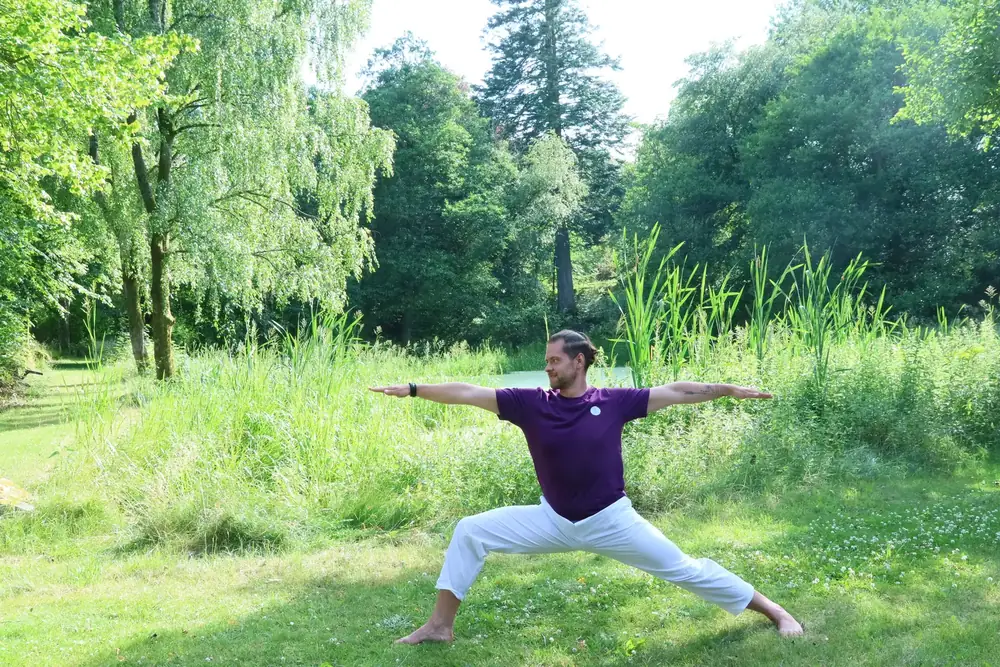
- Space. About 2 × 2 metres, so you can stretch your arms and legs out to the sides.
- A blanket or cushion. Useful under the knees or to sit a little higher.
- An empty stomach. Have your last full meal 2–3 hours before class.
You do not need to buy blocks and straps at the start – a thick book and a towel will do.
Do you need to be flexible?
No. This is the most common reason people never even try yoga. Flexibility is a result of practice, not a condition for starting. In yoga we do not aim for a pose that looks like the photo. We aim for a pose that is safe and useful for your body, which is why almost every pose has an easier version.
How often should you practise?
One class a week is enough to begin with. Once you are used to it, move to two – it is easier to keep a rhythm, and the body does not have time to forget what it has learnt.
Shorter but regular is better. One 60-minute class with a teacher plus 10–15 minutes on your own the next day will give you more than two hours once a month.
Yoga at home: alone or with a teacher?
There are two ways to start yoga at home.
With video recordings. It is free and convenient. There is one drawback, but an important one: nobody sees how you do the poses. Beginners often do not even feel that they are rounding the back or locking the knees, and repeat the mistake for weeks.
In a live online class. You join from home, but the teacher leads the class in real time and sees you on camera. They correct you straight away and offer an easier version if a pose is too hard.
My advice: learn with a teacher for the first month – at a studio or online. Once the basic poses are correct, recordings become a useful addition.
What does a first hatha yoga class look like?
My 60-minute class has four parts:
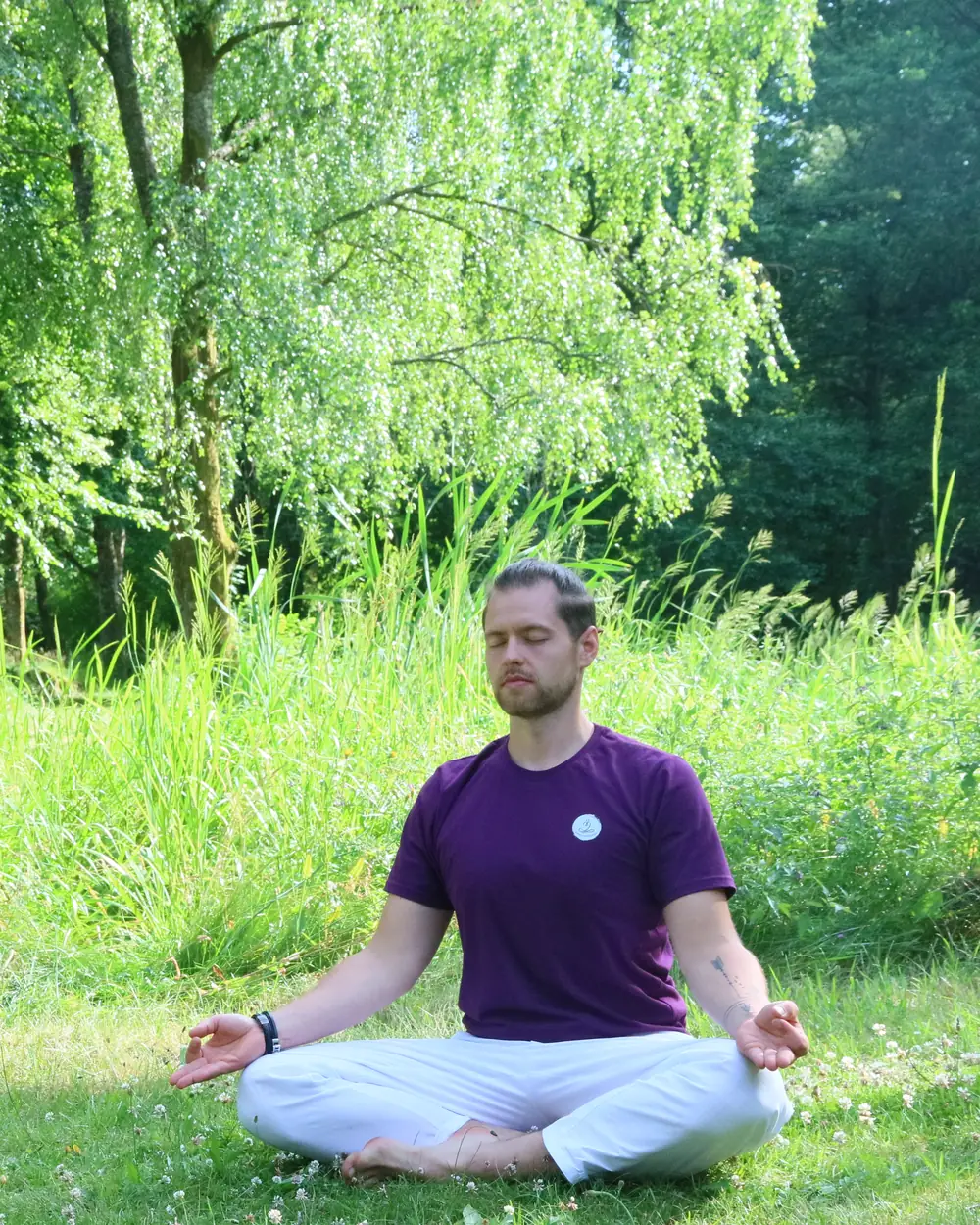
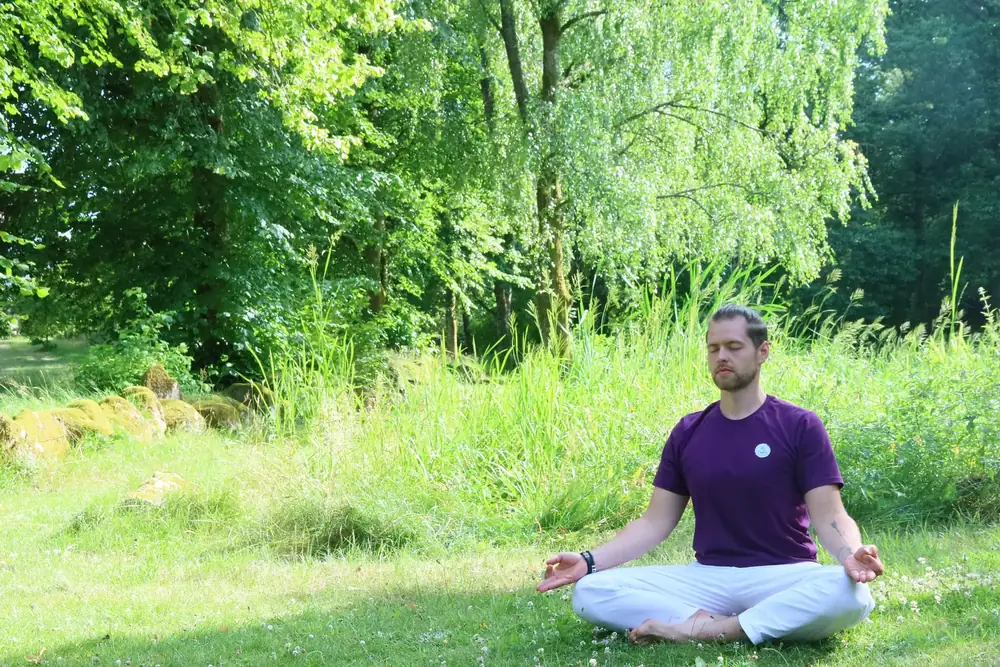
- Settling. A few minutes sitting or lying quietly, so that attention returns to the body.
- Breathing. Simple breathing exercises – we learn to breathe evenly, through the nose.
- Poses (asanas). The main part. I show, explain and correct every pose.
- Breathing and a short meditation. Rest lying down at the end.
The set of poses repeats from class to class, so after a few weeks you know them. You will find which poses these are in “Yoga poses for beginners”.
Want to try right now? Here is my guided evening flow – calm, suitable for beginners, about 18 minutes:
The 5 most common beginner mistakes
- Comparing yourself with others. Another person's body is not your measure. Work within your own limits.
- Holding your breath. In a harder pose many people stop breathing. If you cannot breathe calmly, the pose is too deep for you.
- Going too fast. Wanting to do difficult poses straight away ends in strained muscles.
- Ignoring pain. A feeling of stretch is normal; sharp pain is not. If you feel pain, come out of the pose.
- Irregular practice. Three classes in one week and then a month off does not work. A steady rhythm does.
Safety: when to talk to a doctor
Yoga is not a medical treatment. Talk to your doctor before starting if you:
- have spine or joint injuries or have recently had surgery;
- have a heart or circulatory condition or high blood pressure;
- are pregnant.
Always tell your teacher about any health conditions too – they will choose safe versions of the poses.
A plan for the first month
| Week | What to do |
|---|---|
| 1 | One class with a teacher. The aim is to get to know the poses and the breathing |
| 2 | One class and 10 minutes on your own the next day |
| 3 | Two classes, or one class and two short practices on your own |
| 4 | Two classes. Check which poses are already clear and which still need work |
Frequently asked questions about yoga for beginners
With regular practice, most people learn the basic hatha yoga poses within a few weeks.
Yes. Yoga strengthens the body and improves mobility and balance – everyone needs that. It goes well with strength training and running.
Yes. Hatha yoga is adapted to your physical condition, and the poses have easier versions. If you have health problems, talk to your doctor first.
The time you can keep to. In the morning yoga wakes the body up; in the evening it helps you wind down after work. Consistency matters more than the hour.
Calm hatha yoga burns few calories. But it helps you move regularly, feel your body better and reduce tension. For weight change, nutrition and overall activity matter most.
My group hatha yoga class online costs €12, and a membership starts at €40 a month. A private class is €55.
Ready to start? The hatha yoga group for beginners meets on Tuesdays at 18:30, live on Google Meet, with up to 8 people. If you are not sure, book a free 20-minute call.