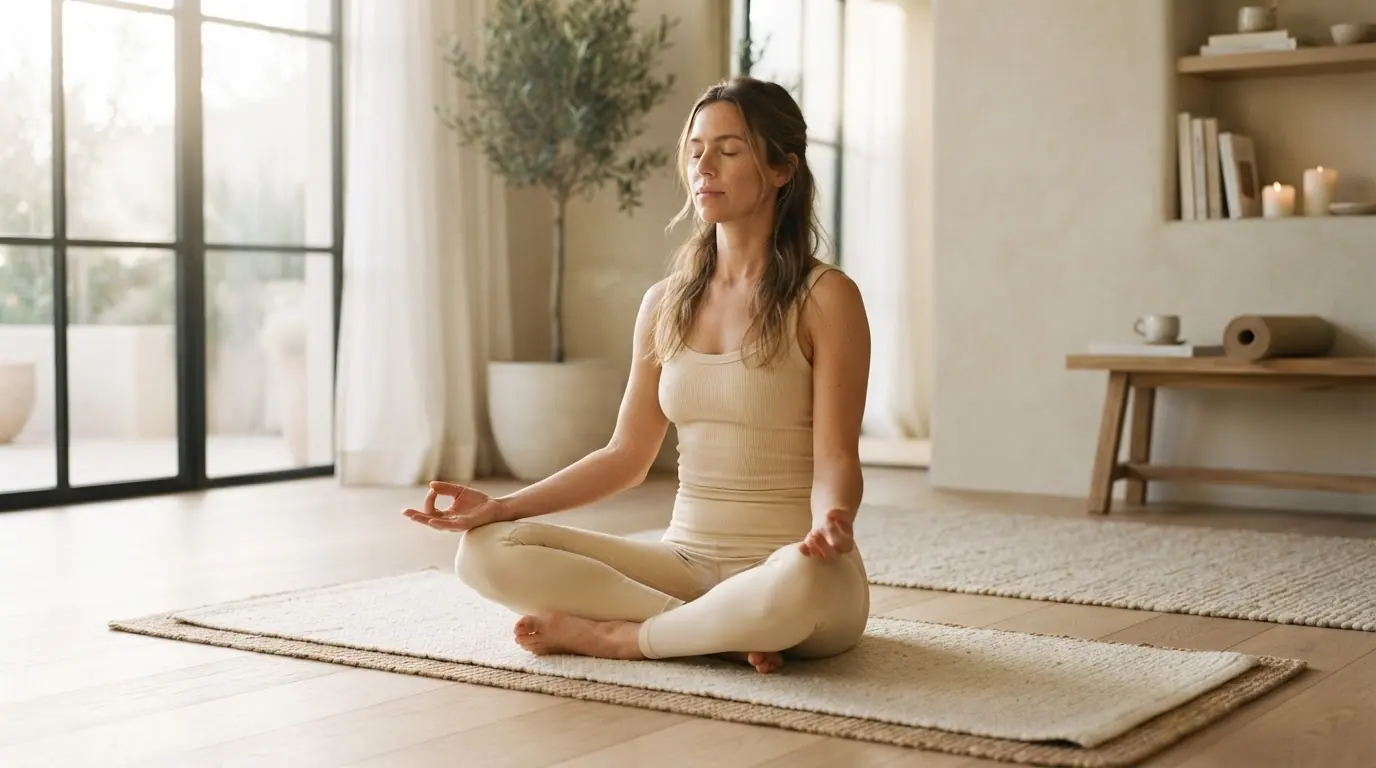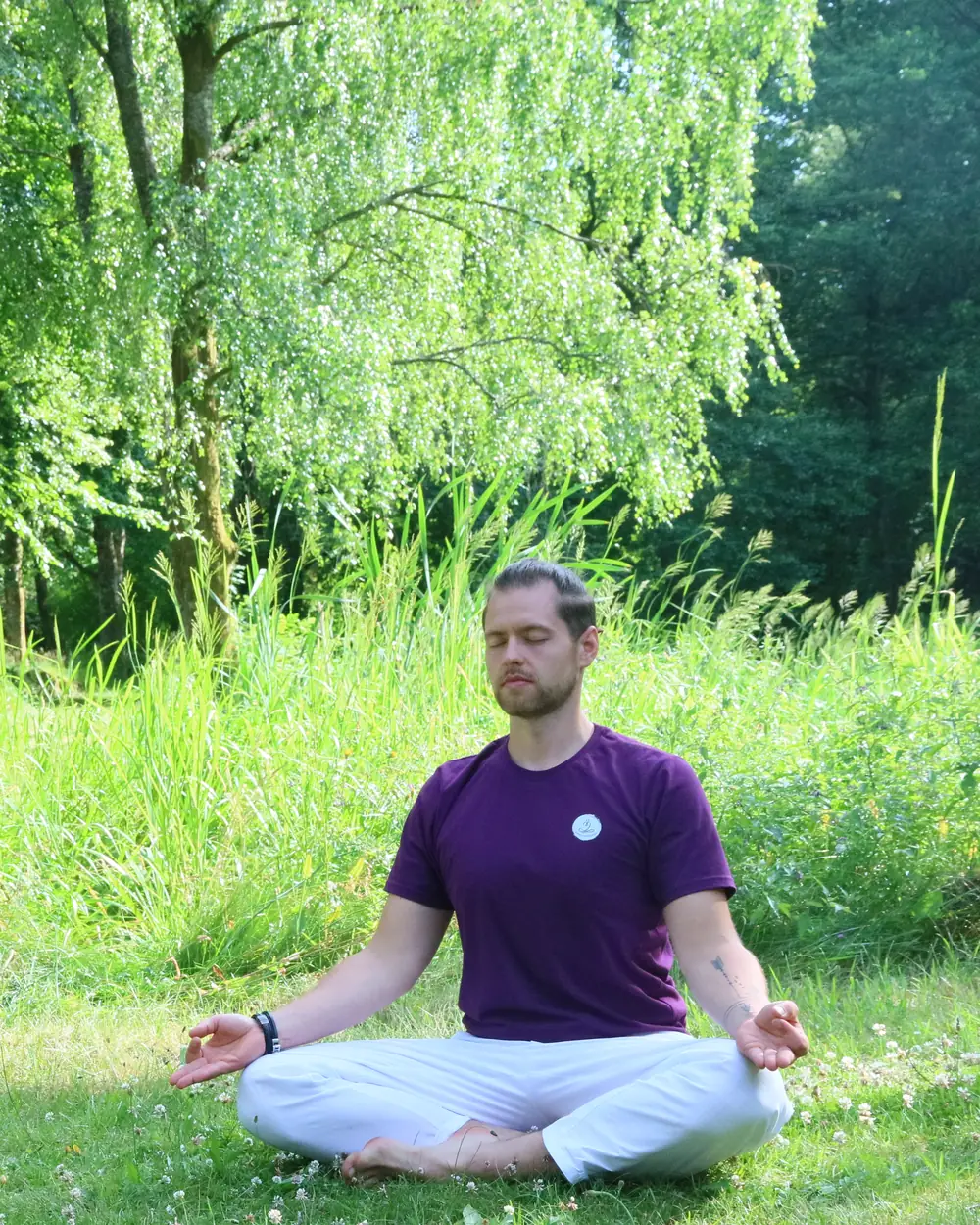
Hatha yoga is a branch of yoga that works through the body: poses (asanas), breathing exercises (pranayama) and relaxation. In modern classes “hatha” means a slow pace: poses are held longer, with pauses between them. That is why hatha yoga suits beginners and people returning after a break best.
What does the word “hatha” mean?
The Sanskrit word “haṭha” means force or effort. Hatha yoga is a practice in which you work deliberately with the body and the breath.
A symbolic explanation is also common in the tradition: “ha” is the sun and “tha” is the moon. In this reading, hatha yoga balances two opposites – activity and calm.
One of the best-known texts of this branch is the “Hatha Yoga Pradipika”, written in the 15th century. It describes poses, breathing techniques and cleansing practices.
What does hatha yoga consist of?
- Asanas – yoga poses. They strengthen the body and train mobility and balance.
- Pranayama – breathing exercises. We learn to breathe evenly and with attention.
- Relaxation and meditation – at the end of a class the body rests and the attention settles.
In the broad sense, hatha yoga covers every branch of yoga that works with the body. Both vinyasa and ashtanga grew out of it. On studio and teacher timetables, however, “hatha” usually means a calm, slow-paced class.
How does hatha yoga differ from vinyasa and ashtanga yoga?
| Hatha yoga | Vinyasa yoga | Ashtanga yoga | |
|---|---|---|---|
| Pace | Slow | Dynamic | Intense |
| Poses | Held longer, with pauses | Flow smoothly into one another | Done in a set order |
| Sequence | Similar from class to class | Different every time | Always the same |
| Who it suits | Beginners | Those with a foundation | Advanced students |
| My classes | Group on Tuesdays at 18:30 | Group on Thursdays at 18:30 | Private only |
If you have never tried yoga, start with hatha. Once the poses feel familiar and you want more movement, move on to vinyasa yoga. Ashtanga yoga is for those who already have a solid foundation.
Who is hatha yoga for?
Hatha yoga suits you if:
- you have never tried yoga or are returning after a long break;
- you have a desk job and feel tension in the back, shoulders or neck;
- you are looking for calm movement rather than an intense workout;
- you want to learn the poses correctly before moving on to faster styles.
It suits you less if you want to sweat a lot and move fast. In that case choose vinyasa.
What are the benefits of hatha yoga?
Regular hatha yoga practice can help you:
- move better – the poses train mobility and flexibility;
- get stronger – in many poses you work with your own body weight;
- improve posture – the back and core muscles get stronger;
- calm down – a slow pace and calm breathing reduce tension;
- feel your body better – you notice where tension builds up and how to release it.
Yoga is not a medical treatment and does not replace a doctor. If you have injuries or health conditions, talk to your doctor before starting.
How does a hatha yoga class run?
My 60-minute hatha yoga class has four parts:
- Settling – a few minutes for attention to return to the body.
- Breathing – simple breathing exercises.
- Poses (asanas) – the main part. Poses are held longer, so I have time to see and correct everyone.
- Breathing and a short meditation – rest at the end.
The set of poses repeats, so you learn them within a few weeks.
Which poses are done in a hatha yoga class?
In a beginners' class these poses come up most often:
- standing – mountain, warrior, triangle, tree;
- on the mat – cat-cow, downward-facing dog, cobra, bridge;
- resting – child's pose and the relaxation pose (shavasana).
How to do them and what their Sanskrit names are, I describe in “Yoga poses for beginners: 12 basic asanas”.
A simple breathing exercise to start with
In hatha yoga, breathing matters as much as the poses. Try belly breathing:
- Lie on your back and rest one hand on your belly.
- Breathe in through the nose to a count of 4. The belly rises.
- Breathe out through the nose to a count of 6. The belly falls.
- Repeat 10 times.
If you feel dizzy, go back to normal breathing. I often start a class with this kind of breathing.
Hatha yoga at home or with a teacher?
You can practise hatha yoga at home with video recordings, but a recording does not see how you do the poses. Beginners often do not feel that they are rounding the back or lifting the shoulders. That is why it is worth learning with a teacher for the first few weeks – at a studio or in a live online class, where the teacher sees you on camera and corrects you straight away.
What do you need for a hatha yoga class?
A mat, comfortable clothes and about 2 × 2 metres of space. If the class is online, also a phone or computer with a camera, so that the teacher can see you. You will find more tips for getting started in “Yoga for beginners: where to start”.
Frequently asked questions about hatha yoga
Yes. It is the best style to start with: the pace is slow, poses are held longer and each one has an easier version.
In hatha yoga poses are held longer, with pauses. In vinyasa yoga poses flow into one another with the breath without pauses, so the pace is faster.
Once a week is enough to begin with. Later I recommend twice a week – it is easier to keep a steady rhythm that way.
It is not fast, but the body works: poses held for longer need strength and attention. The load can be adapted to your level.
It is a calm style, so it burns few calories. It helps you move regularly and reduce tension, but for weight change nutrition and overall activity matter most.
Yes. At the start it is worth learning with a teacher who sees how you do the poses – for example, in a live online class.
Want to try hatha yoga? The hatha yoga group for beginners meets on Tuesdays at 18:30, live on Google Meet, with up to 8 people. A class costs €12. If you are not sure whether this style suits you, book a free 20-minute call.