After long hours of sitting, three things help your back most: gently moving the spine, stretching the hips and opening the chest. About ten minutes is enough for that – a sequence of that length is below. Hold each stretch for 20–30 seconds, breathe calmly and stretch only to a light pull – never to pain.
Why does sitting make your back tense?
When you sit, your hips stay bent for a long time, so the muscles at the front of the hips shorten. The shoulders roll forward, the upper back rounds, and the glutes and core muscles hardly work.
As a result the back becomes stiff and tires more quickly. Stretching brings movement back to where it is missing.
How do you stretch your back safely?
- Warm up first – walk for 2–3 minutes and circle your shoulders and hips.
- Stretch to a light pull. Sharp pain means it is too much.
- Hold for 20–30 seconds and do not bounce.
- Breathe calmly. A muscle lets go more easily as you breathe out.
- Stretch both sides equally.
8 back stretches
1. Cat-cow
Come onto all fours: palms under shoulders, knees under hips. As you breathe in, drop your belly and lift your chest; as you breathe out, round your back upwards. Move slowly, 8–10 times.
For: getting the whole spine moving. A good one to start with.
2. Child's pose
From all fours, sit back on your heels, lower your forehead to the floor and stretch your arms forward. Breathe into your back for 30–60 seconds.
For: the lower back and shoulders. If your knees feel pressure, put a cushion between your thighs and calves.
3. Knees to chest
Lie on your back and draw both knees to your chest with your hands. You can rock slowly from side to side. Hold for 30 seconds.
For: releasing the lower back.
4. Supine spinal twist
Lying on your back, bend your knees and lower them to the right. Stretch your arms out to the sides and turn your head to the left. Hold for 30 seconds and change sides.
For: the spine and the side muscles of the torso. The shoulders stay on the floor.
5. Upper back twist on all fours
From all fours, thread your right arm under your left and lower your shoulder and temple to the floor. Hold for 20–30 seconds and change sides.
For: the upper back and the area between the shoulder blades.
6. Sphinx
Lie on your front, place your elbows under your shoulders and lift your chest. Draw your shoulders down and look straight ahead. Hold for 20–30 seconds.
For: opening the chest after sitting hunched over. If you feel pressure in the lower back, move your elbows further forward.
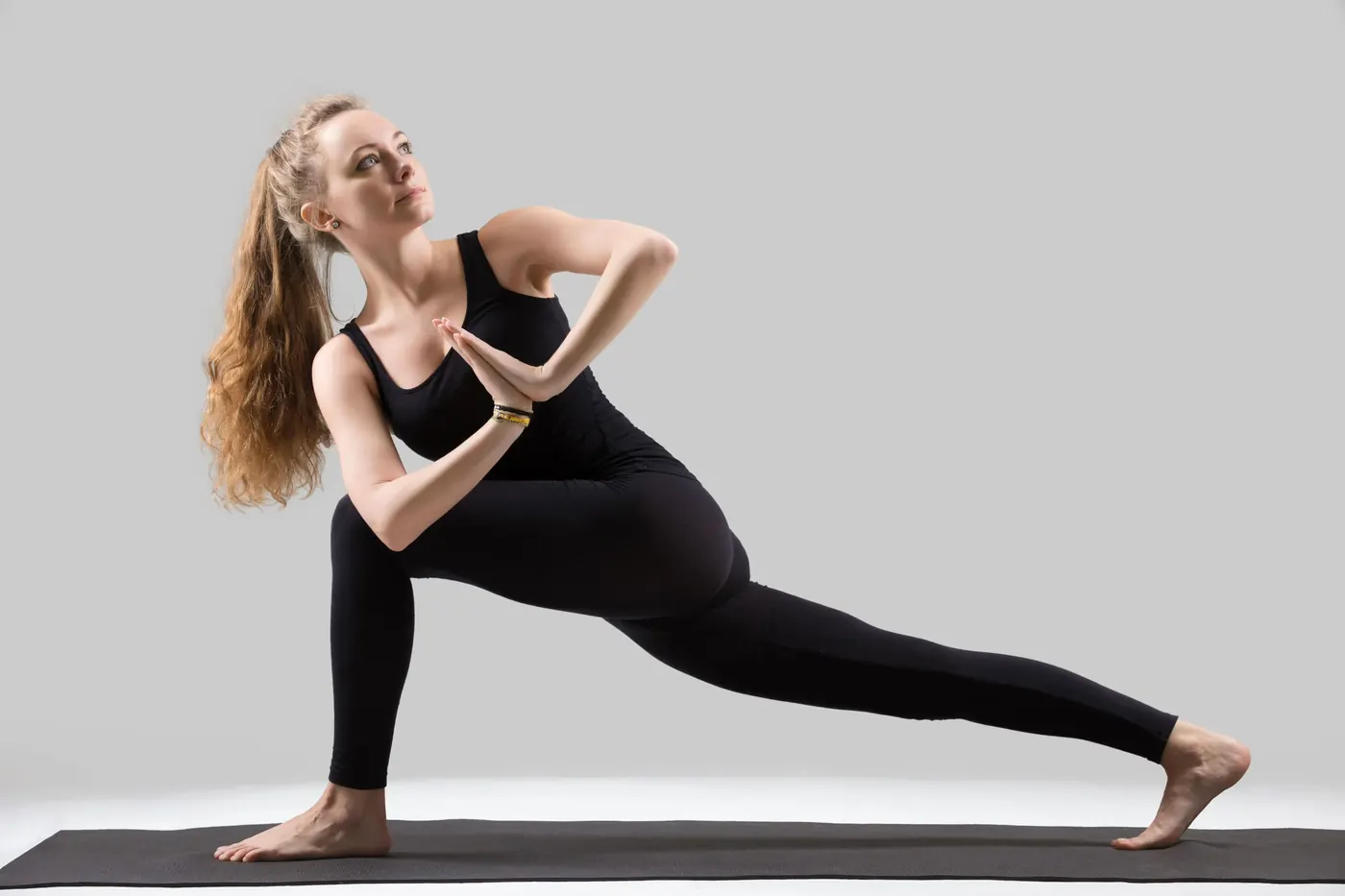
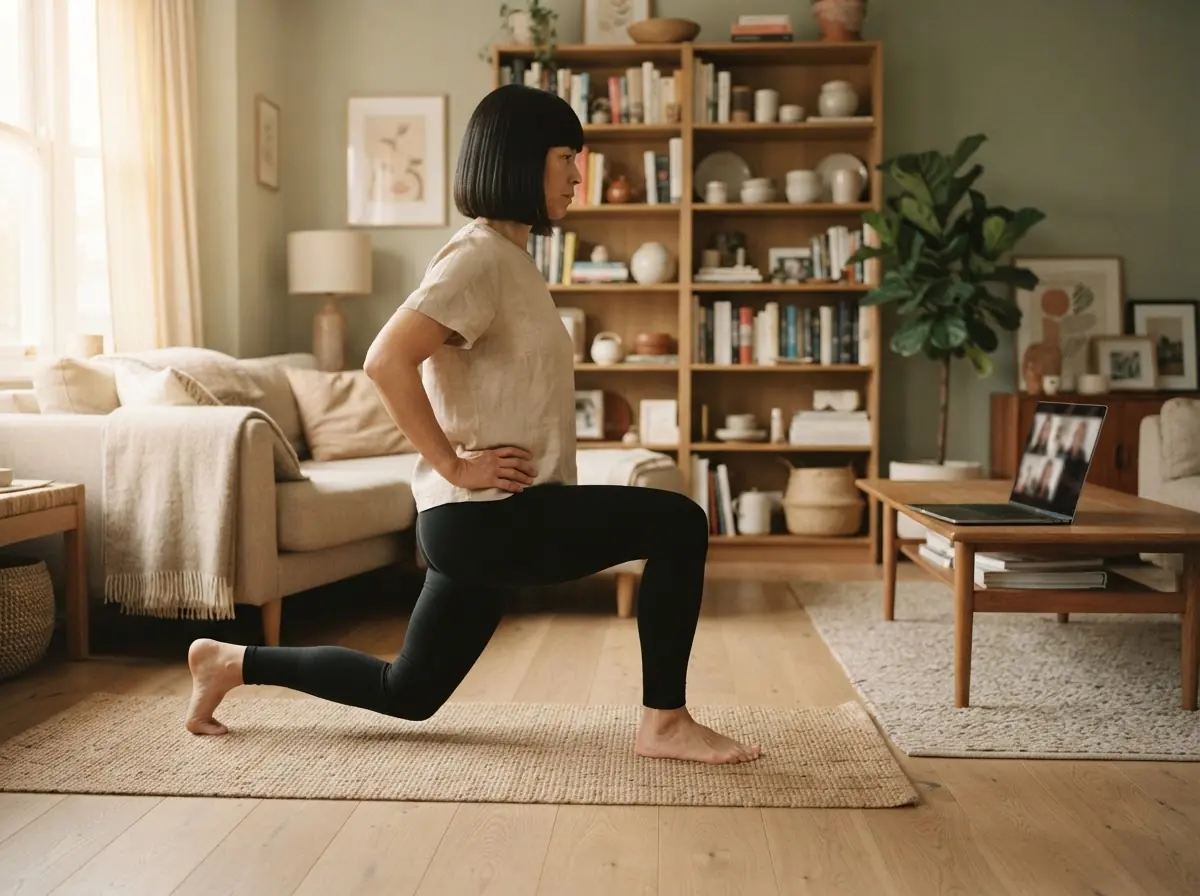
7. Low lunge hip stretch
Step your right foot forward and lower your left knee to the floor. Press your pelvis forward and down and keep your torso upright. Hold for 30 seconds and change legs.
For: the muscles at the front of the hips, which shorten when you sit. Stretching them often eases the lower back too.
8. Seated forward fold on a chair
Sit on the edge of a chair with your feet wider than your hips. Slowly fold forward between your knees and let your arms and head hang down. Hold for 20–30 seconds and come up slowly.
For: the whole back. It works at the office too.
A short video – a few movements for a tight back after a long day:
A 10-minute stretching sequence after work
| Exercise | Duration |
|---|---|
| Cat-cow | 1 min |
| Child's pose | 1 min |
| Upper back twist on all fours | 30 s each side |
| Low lunge hip stretch | 45 s each leg |
| Sphinx | 2 × 30 s |
| Knees to chest | 1 min |
| Supine spinal twist | 1 min each side |
| Calm breathing lying down | 1 min |
When should you not stretch your back?
Stretching is for a tired, tense back. Stop and see a doctor or physiotherapist if:
- the pain is sharp or spreads into the leg;
- your leg or foot goes numb or the muscles feel weak;
- the pain started after an injury or a fall;
- the pain does not go away for several weeks.
Stretching is not a treatment and does not replace a specialist.
Stretching is not enough: your back needs strength too
Stretching eases tension, but lasting results come from stronger core, glute and back muscles. So it is worth adding strength exercises or yoga to your stretching – in yoga the poses both stretch and strengthen.
I described which poses suit this in the article “Yoga poses for beginners: 12 basic asanas”. If you want a plan made specifically for your back, that is what the online personal trainer is for.
Frequently asked questions about back stretches
Ideally every day for 5–10 minutes. A short daily stretch works better than a long one once a week.
For 20–30 seconds, 2–3 times. There is no need to hold for longer than a minute.
Gentle movement usually helps more than lying down, but stretch softly. If the pain is sharp, spreads into the leg or your limbs go numb, see a doctor first.
Both work. In the morning the muscles are stiffer, so stretch more gently. After a working day stretching helps release the tension built up while sitting.
They help open the chest and hips, but posture also needs strong back and core muscles. Stretching combined with strength exercises works best.
Yes. A seated forward fold on a chair, shoulder circles and standing up every 30–45 minutes all work at a desk.
Want someone to see how you move? In the hatha yoga group for beginners on Tuesdays at 18:30 we work on the back too: live on Google Meet, up to 8 people, €12 a class. If your back needs separate attention, book a free 20-minute call and we will choose the format.